Views: 0 Author: Shunhong Electrical Appliance Co., Ltd. Publish Time: 2026-11-06 Origin: Shunhong transformer


A US hair dryer is the single hardest common appliance to run in Europe — not because it is complicated, but because it is the most powerful thing in your suitcase. A typical dryer draws 1500–1875W, more than a laptop, a phone charger and a camera charger combined. Plug it into a European socket with a travel adapter and it trips the breaker or burns out in under a minute: European mains runs 220–240V, roughly double what a 120V heating element is built for.
The fix is a 220V to 110V step-down converter — and hair dryers demand a bigger one than almost any other personal appliance. Here is the exact math, and the one exception that could save you the money entirely.
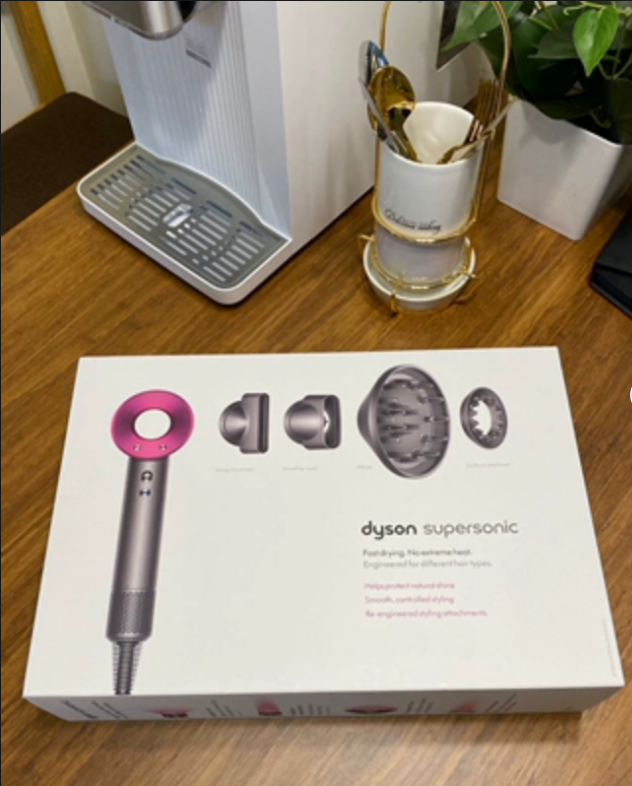
A standard US hair dryer (1500–1875W) needs a 3000VA step-down converter. Smaller 1200W models need 2000VA. But check your dryer for a dual-voltage switch first — many travel and mid-range dryers are marked 125/250V and need nothing but a plug adapter.
Most guides lump hair dryers in with "small appliances" and recommend a 1000–1500W converter. That advice destroys dryers and converters alike, for two reasons.
First, the wattage is real. A 1875W dryer is not a peak figure — it is what the heating element draws the entire time the trigger is pulled. There is no duty cycle to hide behind: unlike a fridge motor that runs intermittently, a hair dryer works at 100% power for as long as you hold it.
Second, running a converter at its limit is how converters die. A transformer sized at exactly 1875W is running at 100% of rating in a hot bathroom, thermally stressed from the first second. Heating loads are sized at ×1.5 the appliance rating so the unit runs cool and lasts years instead of months.
Three steps, two minutes:
Read the label. US dryers are typically rated 1200W (Revlon One-Step style brushes), 1600W (Dyson-class electronics) or 1875W (the standard full-size rating, the UL maximum in North America).
Apply the ×1.5 heating multiplier.
1875W × 1.5 = 2813W of converter capacity
Convert watts to VA. Converters are rated in VA, and watts are what you get after the power factor (roughly 0.6–0.8 for real loads):
2813W ÷ 0.75 ≈ 3750VA → round to the 3000VA–5000VA class
In practice this lands a full-size dryer on a 3000VA unit — with a small margin — or 5000VA if you want it bulletproof or plan to share. A 1200W dryer brush scales down to 2000VA; a 1600W electronic dryer also lands on 3000VA.
A converter that is too small will trip its thermal protection mid-blowout or sag in voltage, stretching drying time. One size up never hurts the dryer.
Before you buy anything, flip the dryer over and look at the handle or the plug. Many dryers — nearly all "travel dryers" and a growing share of mid-range models — carry a small slide switch marked 125V / 250V.
If yours has one:
Set it to 250V
Fit a plug adapter for your country (Type C/E/F for most of Europe, Type G for the UK and Ireland, Type J for Switzerland)
Done — the dryer's internal circuitry handles 230–240V mains natively, and no converter is needed
This does not mean "dual voltage" in the sense of the 100–240V printed on a laptop brick. It means the manufacturer built two positions into the heating circuit. Both positions work; the 250V position is the one for Europe.
If there is no switch and the label reads 120V or 110–120V only, you need the converter. This is the majority of full-size US dryers.
Yes, with one cosmetic caveat. The heating element — which is 95% of the power draw — cares only about voltage, and the converter handles that. The fan motor in most dryers is a small universal motor that tolerates both 50Hz and 60Hz; on some models it may run marginally slower on European 50Hz mains, which slightly reduces airflow but does not damage anything.
That puts hair dryers in the safe category — unlike synchronous-motor devices (turntables, analogue clocks) where frequency is a genuine problem no transformer can fix.
A 3000VA unit runs a full-size dryer comfortably with roughly 1100VA of headroom. That headroom covers a straightener or curling iron (30–100W) running alongside — a realistic morning scenario.
What it does not cover is a dryer plus another heavy appliance. Add the loads that could ever run together:
1875W dryer + 650W rice cooker = 2525W → needs a 5000VA converter at ×1.5
1875W dryer alone → 3000VA
For most households the practical answer is one 3000VA converter in the bathroom for hair tools, and a separate 2000VA unit in the kitchen — the same split our rice cooker converter guide recommends for the cooking counter. Distributed converters stay cooler and avoid extension leads running across rooms.
Four checks, the same order as any heating appliance:
1、Input range covers 220–240V. European mains is 230V nominal — the UK commonly measures close to 240V. A converter specified only for "220V" input sits outside spec on a British supply. Confirm the nameplate states 220–240V input.
2、Continuous rating, not peak. The figure that matters is the continuous VA rating. Some compact converters advertise 3000W as a momentary peak while carrying 750W continuously — a dryer will trip them in seconds. Ask for the continuous figure in writing.
3、Output socket is US-style. Your dryer has a NEMA 5-15 plug. A converter with a European output socket forces an adapter into a circuit carrying real current — an extra contact and failure point. Confirm a US three-prong grounded output.
4、Input plug matches the country. Germany Type F (Schuko), France Type E, Italy Type L, UK Type G, Switzerland Type J. Get the plug fitted at the factory — a plug adapter rated for electronics is not rated for 10A+ continuous transformer input.
Within the Shunhong range, the pairings that fit hair dryers:
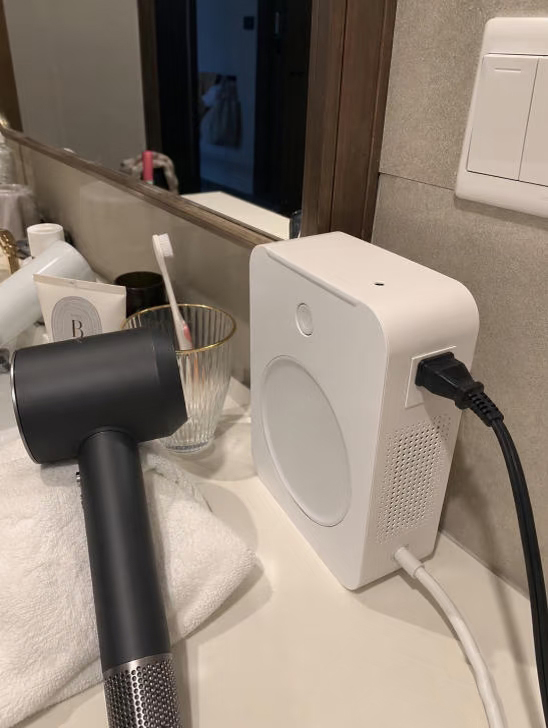
TMB30001 (3000VA, pure copper) — the standard choice for a full-size 1875W dryer. Pure copper windings run cooler under the daily heat-soak a bathroom dryer delivers.
TMB20001 / MB20001 (2000VA) — for 1200W dryer brushes and lighter models.
TGL30001 (3000VA, isolating) — if the bathroom is shared with medical or precision devices, the TGL isolating series adds a galvanic isolation barrier between mains and output.
A premium electronic dryer (Dyson-class) deserves one extra caution: check the manufacturer's own guidance before running it on any converter. A wound transformer delivers a clean output waveform, but some brands void the warranty on converter use regardless — verify before you rely on it daily.
What size converter do I need for a 1875W hair dryer?
1875W × 1.5 (heating margin) ÷ 0.75 (power factor) ≈ 3750VA, which lands on a 3000VA unit at minimum. For headroom or shared use, take 5000VA. A 1200W dryer brush needs 2000VA.
Can I use my Dyson hair dryer in Europe?
Only with a step-down converter if you bought the US 120V version — sized at 3000VA for the 1600W draw. Check Dyson's own guidance first: some premium brands do not warranty their dryers on converters, and buying the regional version is often the cheaper answer for a device this expensive.
My dryer has a 125/250V switch. Do I still need a converter?
No. Set the switch to 250V and use a plug adapter — the dryer handles European mains natively. This applies to most travel dryers and many mid-range models. If there is no switch and the label says 120V only, you need the converter.
Why does a hair dryer need a bigger converter than a rice cooker?
It usually does not need "bigger" so much as "right-sized": a 1875W dryer at ×1.5 needs more capacity than a 650W rice cooker at the same multiplier, because the dryer's rating is nearly three times higher. The formula is identical; only the starting wattage differs.
Will a hair dryer work on 50Hz in Europe?
Yes. The heating element does not care about frequency, and the small fan motor tolerates both 50Hz and 60Hz — some models blow marginally slower, which is harmless. The converter fixes the voltage; frequency is a property of the grid.
Can one converter run my hair dryer and straightener together?
Yes, if the combined load fits. A 1875W dryer plus a 100W straightener is under 2000W, well inside a 3000VA unit's continuous rating. A dryer plus a rice cooker or space heater is a different story — that combination needs 5000VA.
Send us a photo of your dryer's nameplate and the country you are moving to, and we will confirm the converter size and input plug — free, before you order.
WhatsApp: +86 136 9069 8363 — fastest for a nameplate photo
Enquiry form: 【Contact us】
[Shunhong] has manufactured voltage converters in Foshan since 1987 — 39 years, more than 10,000,000 units, CE / FCC / RoHS / CQC certified across the full 60VA–16000VA range, three-year warranty.