Views: 0 Author: Shunhong Electrical Appliance Co., Ltd. Publish Time: 2026-11-24 Origin: ShunHong transformer


Search "voltage converter vs transformer" and you will find two contradictory answers. Store listings say they are the same thing — and for the heavy step-down units, that is true: "voltage converter" and "voltage transformer" are used interchangeably for wound, iron-core machines. But search results also sell pocket-size electronic converters that look nothing like a transformer, weigh 200 grams, and claim 2000W. Both answers are correct, and the difference between them is exactly what decides whether your appliance survives the first plug-in.
This page draws the line — the real one, between the three devices sold under these names — and gives you a 60-second rule for picking the right one.
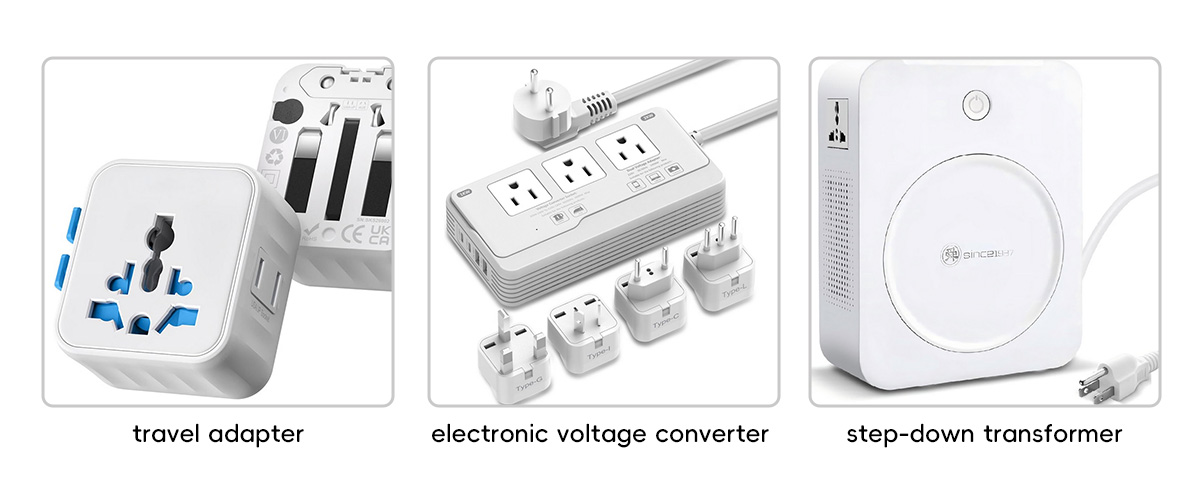
There are three devices behind these labels:
Travel adapter — changes the plug shape only. Never changes voltage. Costs a few dollars.
Electronic voltage converter — a switching circuit, fine for laptops and phone chargers, usually rated for short bursts, not continuous loads. Kills heating appliances and motors.
(Step-down) voltage transformer — an iron-core, copper-wound machine that changes 220–240V to 110–120V continuously. This is what a rice cooker, coffee maker, hair dryer or any appliance with a motor or heating element needs.
The 60-second rule: anything that heats, spins or has a compressor needs a transformer. Anything that just charges a battery works on the wall voltage anyway (check the label for 100–240V) and needs neither.
In the consumer step-down market, "converter" and "transformer" describe the same product category: a mains-frequency transformer with a primary winding for 220–240V and a secondary for 110–120V. Manufacturers use both words in the same sentence because buyers search both. That is why the labels do not conflict — on real transformer products.
The confusion starts because a different product — the electronic converter — borrowed the word "converter". It changes voltage with semiconductor switching instead of windings. It is compact, silent and cheap, and for its intended job (USB chargers, laptop bricks on short trips) it works well. But it has two hard limits:
Peak vs continuous rating. Electronic converters are often labelled with a momentary peak — a "2000W" unit that sustains perhaps 100–300W. A brew cycle or a hair dryer draws full power for minutes; the converter overheats and shuts down, sometimes taking the appliance with it.
No tolerance for inductive and heating loads. Motors, compressors and high-current heating elements stress switching circuits in ways they are never designed for.
So the honest answer to "converter vs transformer": for a laptop, an electronic converter is fine; for any appliance, the word on the box must mean a wound transformer — whatever it calls itself.
Three checks, in order of reliability:
1. Weight. Copper and iron are heavy. A real 2000VA step-down unit carries roughly 6–13 kg of core and windings depending on winding material and duty design; a 3000VA-class pure-copper industrial unit weighs more still. Anything under 2 kg claiming 2000W+ continuous is not a transformer.
Weight is a heuristic, not a guarantee — winding material and duty rating also move it. A copper-wound unit weighs more than an aluminium equivalent at the same VA; a short-duty design weighs less than a continuous one. Use weight to disqualify pretenders, not to rank honest products.
2. The label word "continuous". Real transformers state a continuous VA rating — 2000VA continuous — not just a peak wattage. If the box only quotes W and the word "peak" appears anywhere, walk away.
3. Output socket type. A transformer built for appliances has grounded US-style output sockets so your equipment plugs in directly. Electronic converters usually have a slim universal socket and a fused dome — a shape that exists precisely because they expect light loads.
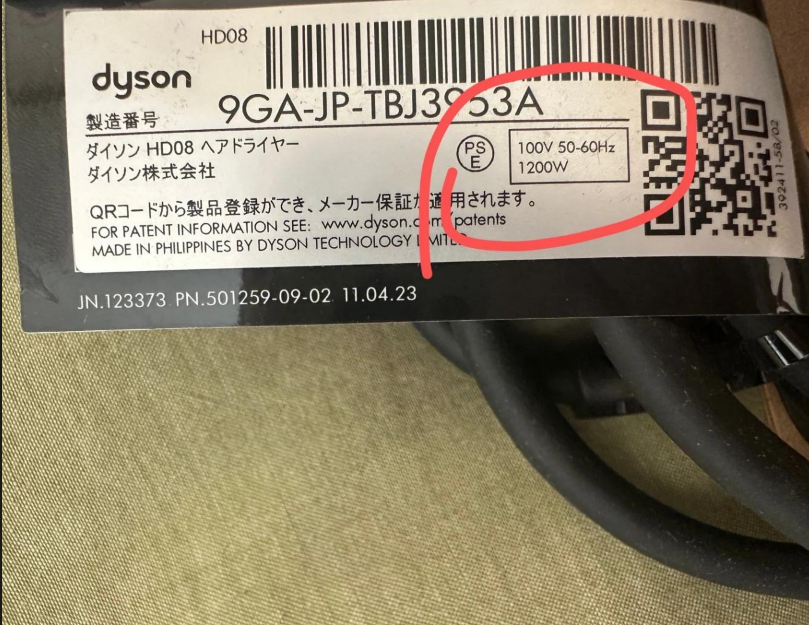
Before buying anything, read the appliance label. Modern electronics — laptop bricks, phone chargers, camera chargers, most TVs from the last five years — are marked 100–240V, 50/60Hz. These accept European 230V as-is; they need only a plug adapter, or nothing at all with a local cord.
The appliances that actually need a step-down transformer are the single-voltage 120V ones: kitchen machines with heating elements and motors, hair dryers, US-spec treadmills, audio gear with linear supplies, and anything labelled 110V or 120V only. Our rice cooker converter guide and coffee maker converter guide size the two most common kitchen cases; the full relocation guide covers the whole house.
Once you are shopping for a real transformer, one more distinction matters. Most consumer step-down units are autotransformers — one shared winding, smaller and cheaper, perfectly standard for powering appliances. Isolation transformers have separate primary and secondary windings with no metallic connection between mains and output, which matters for audio equipment, medical devices and workshop tools where a fault on the supply side must not pass straight through to the equipment side.
If your load list includes audio, medical or precision gear, ask for the isolating series explicitly — for Shunhong that is the [TGL isolating series]. For kitchen and household appliances, an autotransformer step-down is the right and normal tool.
The four checks that separate a working purchase from a returned one:
1. Input rated 220–240V, not just "220V". European mains is 230V nominal and the UK measures closer to 240V; the input range must cover the band.
2. Continuous VA rating above your load with margin. The working rule is nameplate watts × 1.5 for heating loads (motors and compressors ×3), corrected for power factor. The full math is in the relocation guide — for this page, remember only: the rating must say continuous, and bigger is harmless.
3. Grounded US-style output. Your appliance plugs in as it does at home — no output adapters stacked on live circuits.
4. Input plug fitted for your country. Germany Type F, France Type E, Italy Type L, UK Type G, Switzerland Type J — factory-fitted, because a travel adapter on the transformer's own input is not rated for 10A+ continuous.
Shunhong builds step-down transformers in the 60VA–16000VA range with pure-copper (TMB series) and aluminium (MB series) windings, plus the TGL isolation series for audio, medical and workshop loads. All units accept 220–240V input, output 110V ±10% through grounded US-style sockets, and ship with the input plug fitted for the destination country — Type C/E/F/G/J.
Is a voltage converter the same as a transformer?
For heavy step-down units, yes — the words are used interchangeably for wound, iron-core machines that change 220–240V to 110–120V. The confusion comes from electronic converters, a different low-wattage product that borrowed the same name. For appliances, buy a real transformer; the label should state a continuous VA rating.
Can I use an electronic converter for a hair dryer or coffee maker?
No. Electronic converters are rated for short bursts on light loads — a 1500W heating appliance will trip, overheat or destroy a unit marketed as "2000W". Heating and motor loads need a wound step-down transformer sized at continuous rating; our hair dryer guide covers the sizing.
Why are transformers so heavy — is more weight better?
Real transformers are heavy because copper windings and an iron core are physically unavoidable at mains frequency. Weight is a disqualifier, not a ranking: use it to spot pretenders (under 2 kg claiming 2000W+), and remember copper-wound units weigh more than aluminium at the same rating.
Do I need a converter, a transformer, or just a plug adapter?
Read the appliance label first. 100–240V electronics need only a plug adapter. Single-voltage 120V appliances — anything that heats, spins or compresses — need a step-down transformer. Nothing you plug into a wall in Europe needs a "voltage-changing adapter" of the pocket variety.
Can one transformer run several appliances at once?
Yes, if sized for the sum of the loads that could ever run together — but for kitchens, dedicated units per high-power appliance usually cost less and run cooler than one giant shared unit. The combined math is in our coffee maker guide.
Is an autotransformer safe for household appliances?
Yes — autotransformers are the standard design for consumer step-down voltage conversion. Isolation matters for audio, medical and precision workshop gear, where a supply-side fault must not pass through to the equipment side; choose an isolating series for those loads.
Send us the appliance list you are moving and the country you are moving to, and we will tell you which devices are transformers-needed, which are adapter-only, and the size for each — free, before you order.
WhatsApp: +86 136 9069 8363 — fastest for a nameplate photo
Enquiry form: 【Contact us】
[Shunhong] has manufactured voltage transformers and converters in Foshan since 1987 — 39 years, more than 10,000,000 units, CE / FCC / RoHS / CQC certified across the full 60VA–16000VA range, three-year warranty.